
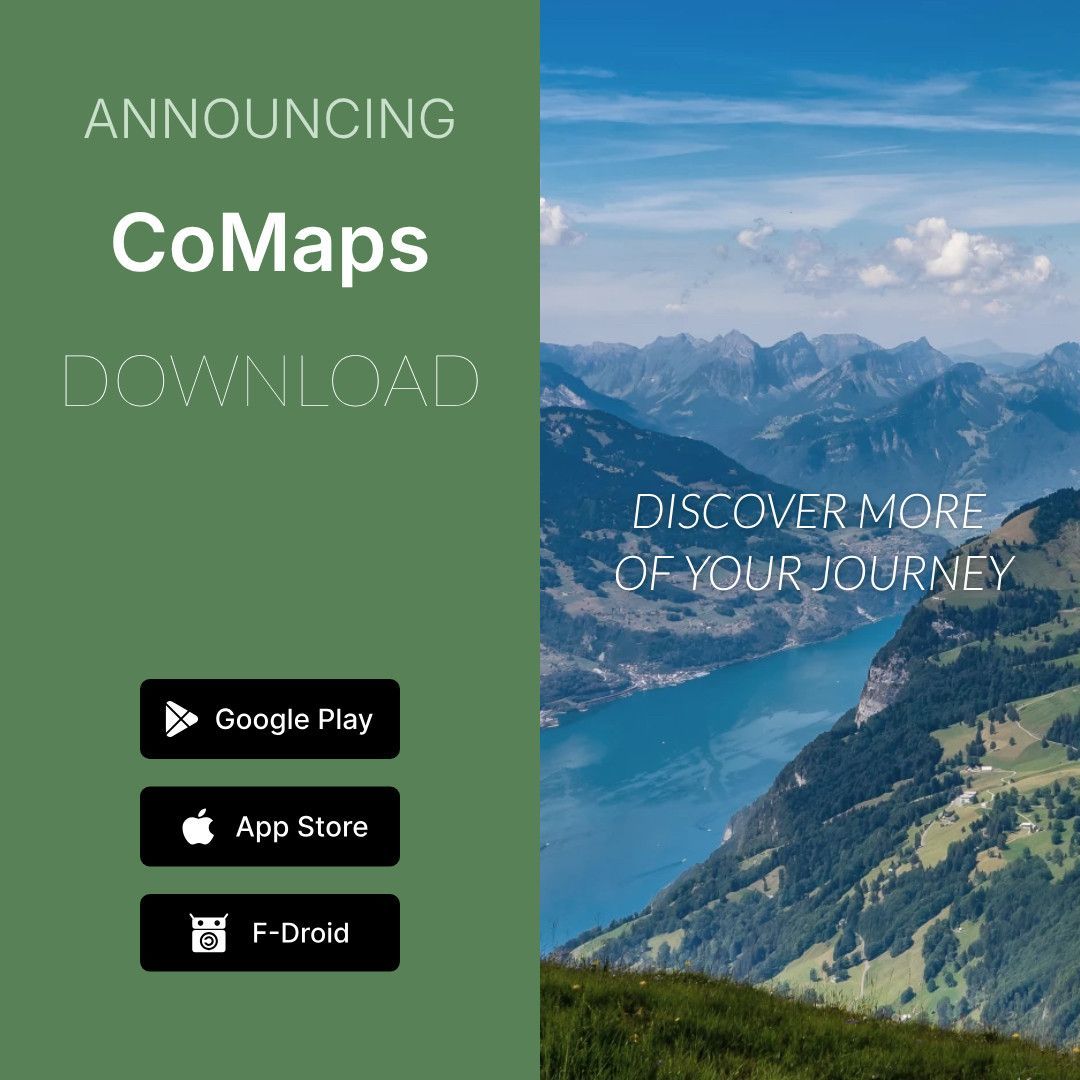
CoMaps, a community-driven fork of the popular open-source navigation app Organic Maps, has officially launched across major app stores, marking a significant milestone in the ongoing battle for transparent governance in open-source projects. 🚀 This launch represents more than just another navigation app—it embodies a revolutionary approach to community-driven software development that challenges traditional top-down project management.
Multi-Platform Availability with Zero Barriers 📱 Users can now download CoMaps for iOS via the Apple App Store, for Android through the Google Play Store, and for privacy-conscious users on F-Droid. This comprehensive platform coverage ensures maximum accessibility while catering to different user preferences, from mainstream app store users to privacy advocates who prefer alternative distribution channels. 🌐
Core Privacy-First Features Remain Intact 🔐 CoMaps maintains the essential functionality that made Organic Maps popular: completely offline navigation, efficient battery design, privacy-respecting architecture with no tracking or data collection, and a completely free experience without advertisements. The app enables users to plan and navigate trips entirely offline, making it invaluable for travelers in areas with poor connectivity or those concerned about data usage and privacy. ✈️
Governance Revolution Sets CoMaps Apart 🏛️ What truly distinguishes CoMaps from its predecessor is its commitment to open and transparent decision-making, where all project decisions are made publicly with full community visibility and input. This focus on community engagement aims to deliver value for users rather than prioritize profit, with contributors having a voice in the app's future direction through democratic voting processes. 🗳️
Community-Driven Development Philosophy 👥 The community has already demonstrated its democratic approach by voting on the project name, selecting the CoMaps branding, choosing color schemes, and making decisions about removing affiliate links and moving away from certain Google services. This participatory development model ensures that user needs and community values drive feature development rather than corporate interests or individual leadership preferences. 💡
Born from Governance Disputes ⚖️ CoMaps emerged after members of the Organic Maps community raised concerns about project governance and transparency in April 2025, outlined in an open letter to the project's shareholders. The lack of satisfactory resolution between shareholders and community contributors led to the establishment of this separate, community-controlled project. 📜
Rapid Community Growth Signals Success 📈 Within just two months of the fork's announcement, CoMaps has attracted nearly 2,000 subscribers across its social media channels, with active contributors working on traffic data, design improvements, translations, and release processes. This rapid growth demonstrates significant community appetite for transparent, democratically-governed open-source projects. 🌱
Technical Foundation Built on Proven Technology 🛠️ CoMaps leverages the same robust OpenStreetMap data foundation as Organic Maps, offering offline-focused navigation with privacy-respecting design principles. The app supports multiple platforms including Android, iOS, and even experimental Linux/macOS desktop versions, ensuring broad accessibility across different computing environments. 💻
📰 News Summary
🔑 Key Highlights:
- 🗺️ CoMaps launches as community-driven fork of Organic Maps on Google Play, Apple App Store, and F-Droid
- 🔓 Revolutionary transparent governance model with all decisions made publicly and community voting
- 📱 Maintains core features: offline navigation, battery efficiency, privacy protection, and ad-free experience
- 👥 Emerged from governance disputes over Organic Maps leadership and transparency concerns in April 2025
- 🌱 Rapid community growth with 2,000+ social media subscribers and active contributor base within 2 months
- 🗳️ Democratic decision-making demonstrated through community votes on name, branding, and feature direction
- 💻 Multi-platform support including experimental desktop versions for Linux and macOS systems