
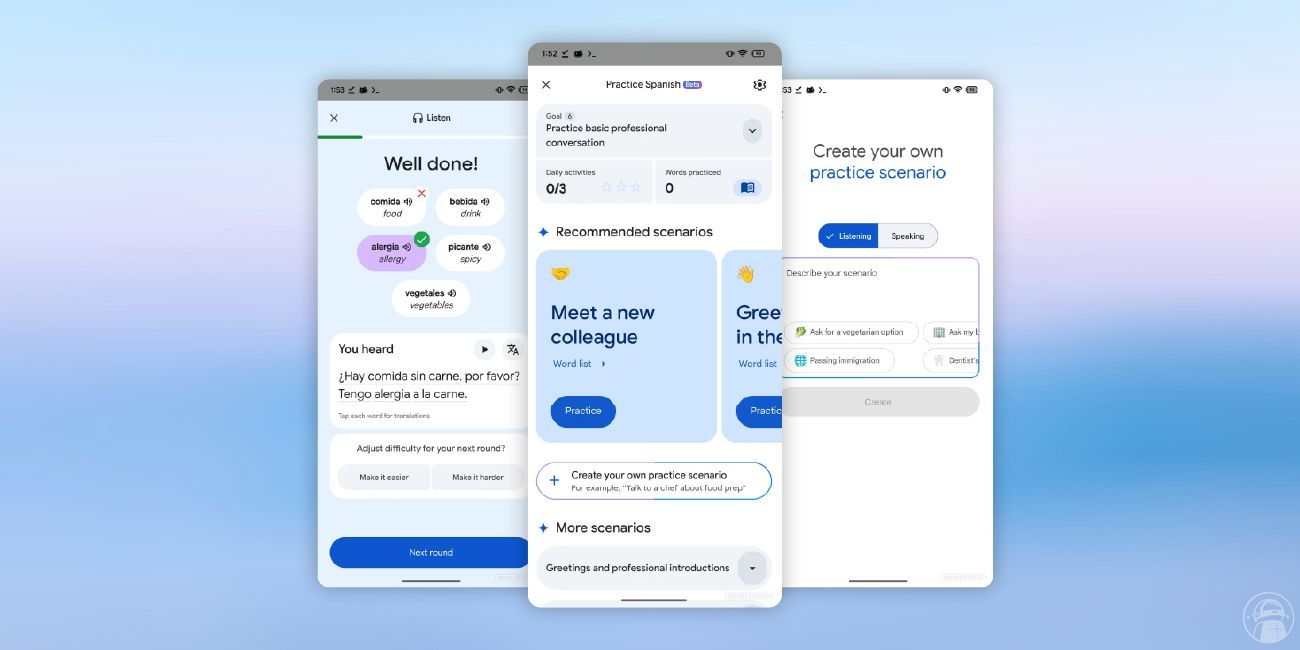
Google is secretly developing a sophisticated AI-powered language learning feature within Google Translate that could fundamentally disrupt the language education market dominated by platforms like Duolingo. 📚 This strategic expansion represents Google's ambitious attempt to leverage its translation expertise and AI capabilities to capture a significant portion of the lucrative language learning sector, which has seen explosive growth in recent years.
Hidden "Practice" Tool Reveals Advanced AI Capabilities 🔍 Android Authority successfully discovered and activated the concealed "Practice" feature in Google Translate's latest release, revealing an AI-driven system that creates personalized lessons tailored to individual user proficiency levels and specific learning needs. The intelligent system adapts lesson content based on user performance and preferences, demonstrating Google's sophisticated approach to educational AI. ✨ This personalized learning methodology could provide significant advantages over traditional one-size-fits-all language learning approaches currently available in the market.
Multi-Level Learning System Accommodates All Users 🎯 The platform requires learners to specify their proficiency level as Basic, Intermediate, or Advanced before beginning exercises, ensuring that content difficulty matches user capabilities from the start. Currently, the system supports English, Spanish, French, and Portuguese languages, though only French and Spanish are available for active practice sessions. 🌍 This tiered approach demonstrates Google's understanding that effective language learning requires appropriate challenge levels rather than generic content delivery.
Context-Driven Exercises Enable Practical Learning 💬 Users can engage with preset learning scenarios or create custom exercises by describing specific situations through text prompts, enabling highly relevant, context-driven language practice. This flexibility allows learners to focus on vocabulary and phrases relevant to their personal or professional needs, such as business conversations, travel scenarios, or academic discussions. 🎪 The contextual learning approach addresses a key limitation of traditional language apps that often focus on abstract vocabulary rather than practical communication skills.
Monetization Strategy Remains Unclear 💰 References to a "trial period" with early and unlimited access suggest the feature is currently free but may transition to a paid model once officially launched. Google hasn't clarified whether this would operate as a standalone service or integrate with Google Gemini's subscription offerings, creating uncertainty about the final pricing structure. 📊 The monetization approach will significantly influence how aggressively Google can compete with established language learning platforms that rely on subscription revenue models.
Direct Challenge to Duolingo's Market Dominance ⚔️ This development represents a direct assault on Duolingo's market leadership, particularly as the language learning giant has recently emphasized its own AI transformation initiatives. Google's entry leverages its vast translation data, AI research capabilities, and existing user base to create a formidable competitor in the education technology space. 🏆 The timing suggests Google recognizes the strategic importance of the language learning market and believes it can offer superior AI-powered educational experiences.
Integration Advantages Could Prove Decisive 🔄 Google's ability to integrate language learning directly into its widely-used Translate app provides significant distribution advantages over standalone learning applications. Users already familiar with Google Translate could seamlessly transition to practice exercises without downloading additional apps or creating new accounts. 📱 This integration strategy could accelerate user adoption while reducing the friction typically associated with starting new learning routines.
AI Arms Race Intensifies in Education 🚀 Both Google and Duolingo's emphasis on AI capabilities highlights the intensifying competition in educational technology, where personalized learning experiences are becoming the primary differentiator. Google's vast AI research resources and language processing expertise could enable more sophisticated personalization than current market leaders can provide. 🧠 The competition will likely drive rapid innovation in AI-powered education, ultimately benefiting learners through improved tools and methodologies.
Official Launch Timeline Remains Secret 📅 Google has provided no official announcement or release timeline for the language learning feature, suggesting the development is still in experimental phases with potential for significant changes before public launch. The hidden nature of the current implementation indicates Google is carefully testing the feature before committing to a full market entry. 🔬 The secretive development approach allows Google to refine the product without publicly committing to specific features or timelines.
📰 News Summary
🔑 Key Highlights:
- 🔤 Google developing AI-powered language learning feature within Google Translate to compete with Duolingo
- 🔍 Hidden "Practice" tool discovered by Android Authority offers personalized lessons based on user proficiency
- 🎯 System supports Basic, Intermediate, Advanced levels with English, Spanish, French, Portuguese languages
- 💬 Users can practice preset scenarios or create custom exercises through text prompt descriptions
- 💰 References to "trial period" suggest free access now but potential paid model later
- ⚔️ Direct challenge to Duolingo's market dominance as both companies emphasize AI capabilities
- 📱 Integration within existing Translate app provides distribution advantages over standalone competitors
- 📅 No official announcement or release timeline provided, suggesting experimental development phase