
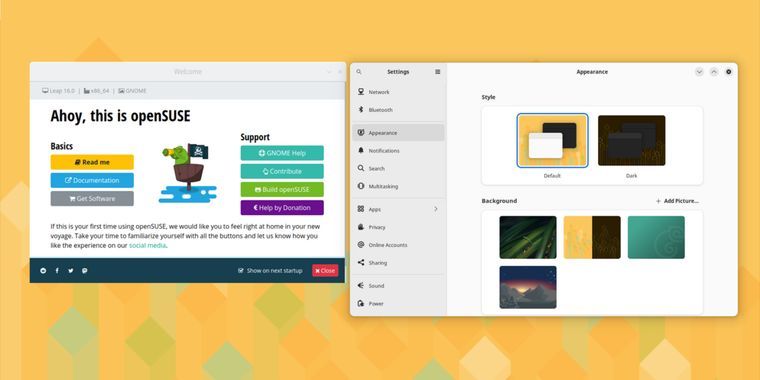
openSUSE has released Leap 16, a major update built on SUSE Linux Enterprise 16 with Linux kernel 6.12 LTS that introduces the modern Agama web-based installer while discontinuing default 32-bit support to address the 2038 time overflow issue. 🚀 This release represents significant modernization efforts that prepare the distribution for future computing requirements while maintaining enterprise-grade stability through its SUSE Linux Enterprise foundation.
Agama Installer Replaces Traditional YaST Setup 🌐 The new Agama installer provides a web-based installation experience that supports both local and remote setup configurations, enabling multi-version installations of Leap, Tumbleweed, Slowroll, and MicroOS from a single interface. Remote monitoring capabilities through agama monitor allow administrators to oversee installation progress from separate machines. 🔧 This modern approach to system installation reflects contemporary deployment practices where remote and automated installations have become increasingly common in enterprise environments.
32-bit Support Disabled by Default for Y2038 Compliance ⏰ Leap 16 addresses the Year 2038 problem by disabling 32-bit (ia32) support by default, though users can manually re-enable it for legacy applications such as older Steam games that require 32-bit compatibility. This proactive approach ensures that openSUSE systems will function correctly beyond January 19, 2038, when 32-bit time representations will overflow. 🔢 The decision balances future-proofing with practical considerations for users who still need to run legacy software.
CPU Requirements Modernize Supported Hardware 💪 The release now requires processors supporting the x86-64-v2 instruction set, effectively limiting compatibility to CPUs released after 2008. Users with older hardware are directed toward Tumbleweed or Slowroll distributions that maintain broader hardware compatibility. ⚙️ This hardware requirement ensures that Leap 16 can leverage modern processor features while maintaining security and performance standards appropriate for contemporary computing environments.
Desktop Environment Options Cover Major Preferences 🖥️ Installation options include Base (server), GNOME 48, KDE Plasma 6.4, or Xfce 4.20, providing users with choices across different desktop environment philosophies and resource requirements. This variety ensures that Leap 16 can serve diverse use cases from minimal server installations to full-featured desktop experiences. 🎨 The desktop flexibility maintains openSUSE's tradition of supporting multiple interface options rather than forcing users toward a single desktop environment.
Security and System Management Enhancements 🛡️ SELinux becomes the default security module, providing mandatory access control capabilities that enhance system security beyond traditional permission models. Cockpit integration offers web-based system management capabilities, while Myrlyn emerges as a YaST replacement for certain configuration tasks. 🔐 These changes modernize openSUSE's security and management infrastructure while maintaining the enterprise-grade capabilities that distinguish it from consumer-focused distributions.
Package Management Receives Performance Improvements 📦 Zypper gains parallel download capabilities that accelerate package installation and updates, while split repositories reduce metadata sizes for more efficient package database management. These improvements address common complaints about package management performance in previous releases. ⚡ The package management enhancements ensure that system updates and software installations complete more quickly, improving overall user experience.
SysV Init Removal Completes systemd Transition 🔄 The elimination of SysV init support completes openSUSE Leap's transition to systemd as the exclusive init system, simplifying system initialization while removing legacy compatibility code. This change aligns Leap with contemporary Linux distribution practices where systemd has become the dominant init system. 🎯 The removal acknowledges that maintaining dual init system support creates unnecessary complexity for a distribution targeting modern use cases.
Support Timeline Provides Stability Guarantee 📅 Leap 16 will receive 24 months of updates with annual minor releases planned through Leap 16.6, providing users with predictable maintenance schedules and long-term stability guarantees. This support timeline makes Leap suitable for production deployments where system stability and maintenance predictability are crucial. 🏢 The extended support period ensures that organizations can deploy Leap 16 without concerns about premature end-of-life forcing disruptive migrations.
📰 News Summary
🔑 Key Highlights:
- 🦎 openSUSE Leap 16 released with Linux kernel 6.12 LTS based on SUSE Linux Enterprise 16
- 🌐 Debuts Agama web-based installer supporting local/remote setup and multi-version installations
- ⏰ Disables 32-bit support by default to address 2038 time overflow, can be manually re-enabled
- 💪 Requires x86-64-v2 instruction set limiting compatibility to post-2008 processors
- 🖥️ Offers Base, GNOME 48, KDE Plasma 6.4, or Xfce 4.20 installation options
- 🛡️ SELinux default security module, Cockpit system management, Myrlyn YaST replacement
- 📦 Zypper gains parallel downloads and split repositories for improved performance
- 📅 24-month support lifecycle with annual minor releases through Leap 16.6