
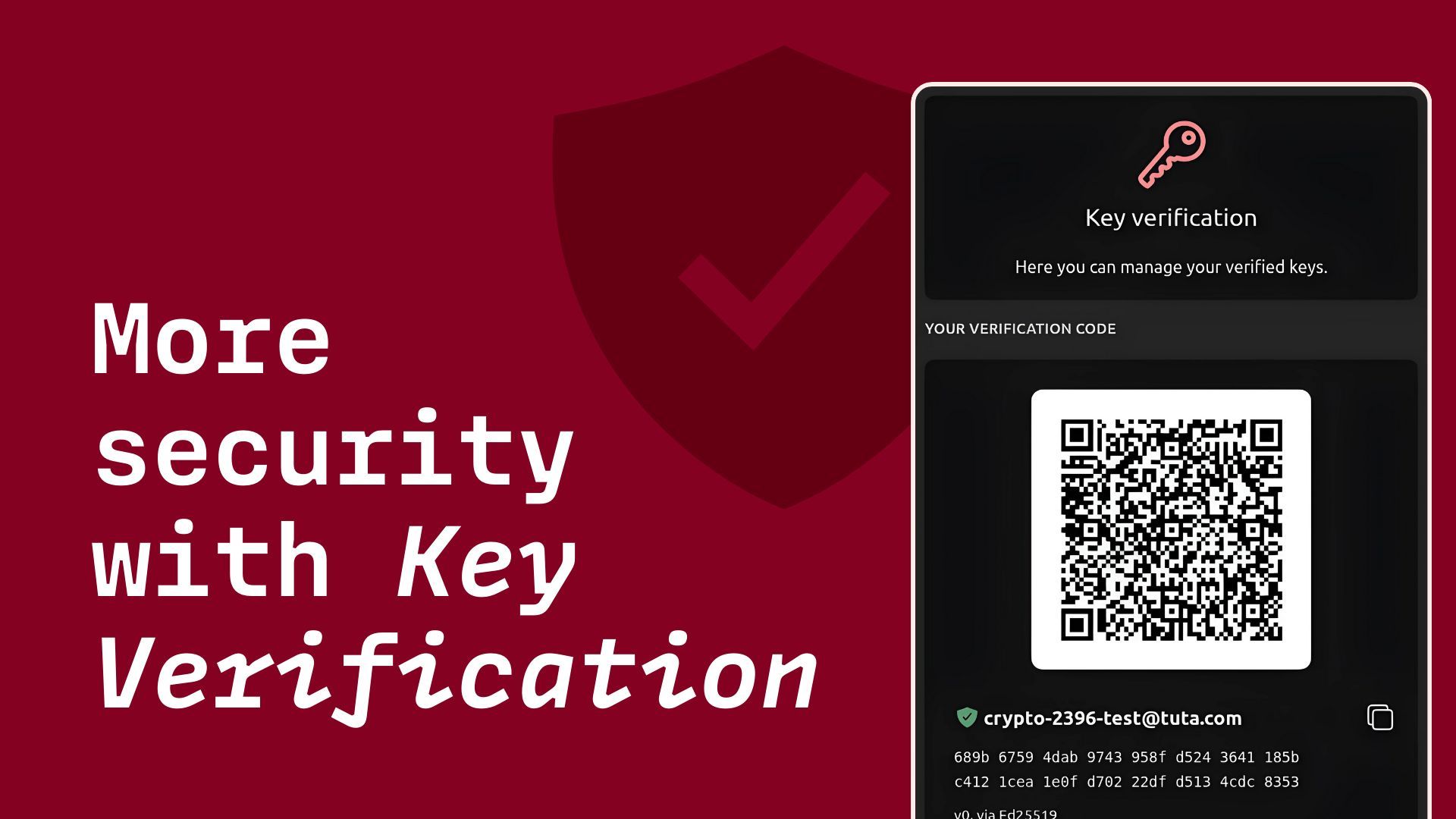
Tuta has launched key verification functionality that strengthens security across its encrypted email and calendar services by enabling users to authenticate public keys and prevent sophisticated interception attacks. 🔒 This enhancement addresses a critical vulnerability in encrypted communications where attackers can potentially substitute their own keys to intercept private messages, representing a significant advancement in protecting user privacy against advanced threat actors.
Key Verification Eliminates Man-in-the-Middle Vulnerabilities 🕵️ The new feature enables users to confirm the authenticity of public keys when establishing encrypted communications, directly addressing the risk of man-in-the-middle attacks where adversaries substitute malicious keys to intercept private correspondence undetected. This verification process transforms encrypted messaging from a potentially vulnerable automatic system into a verified secure channel. ⚡ The authentication mechanism ensures that users can trust their encrypted communications are reaching intended recipients without compromise by network attackers or malicious intermediaries.
Quantum-Resistant Encryption Foundation Remains Strong 🧬 Building upon its existing quantum-resistant encryption algorithms, Tuta continues to encrypt all mailbox data end-to-end using asymmetric cryptography with private and public key pairs. When users send encrypted messages to other Tuta users, the system automatically secures content with recipients' public keys, maintaining seamless operation while providing robust security. 🚀 The quantum-resistant foundation ensures that Tuta's encryption remains effective against both current and future computational threats, including potential quantum computing attacks.
Automated Encryption Maintains User-Friendly Experience ✨ The encryption process operates transparently for senders, automatically securing messages with recipients' public keys without requiring manual intervention or technical expertise. This seamless integration ensures that strong security doesn't compromise usability or create barriers to encrypted communication adoption. 💻 The automated approach removes technical friction that often prevents users from consistently using encryption, making secure communication accessible to non-technical users.
Independent Key Confirmation Strengthens Trust Chain 🤝 Tuta requires users to independently confirm each other's keys, with verification most effective when conducted in person or through trusted channels outside the email system. Once users exchange and save verified key codes, the client automatically checks that correct keys are used for future encrypted messages, ensuring ongoing authenticity. 🔍 This independent verification process creates a trust chain that cannot be compromised by network attacks or server-side manipulation.
Defense Against Advanced Persistent Threats 🎯 The key verification system provides defense against sophisticated attackers who might compromise network infrastructure or attempt long-term surveillance through key substitution attacks. By requiring out-of-band key verification, Tuta ensures that even highly capable adversaries cannot easily intercept encrypted communications. 🛡️ This protection proves particularly valuable for users facing advanced persistent threats, including journalists, activists, and business professionals handling sensitive information.
Privacy-First Architecture Maintains Data Control 🏔️ The implementation maintains Tuta's commitment to user privacy by ensuring that key verification occurs between users directly rather than through centralized servers that could become surveillance targets. This decentralized approach prevents service providers or external parties from accessing verification data or compromising the trust establishment process. 🌐 The architecture ensures that users maintain complete control over their security verification without depending on third-party trust authorities.
Enhanced Security Without Complexity Trade-offs ⚙️ Tuta's key verification implementation balances strong security with practical usability, ensuring that users can verify keys without requiring extensive cryptographic knowledge or complex procedures. The system provides clear guidance for verification while maintaining the technical rigor necessary for effective security. 📋 This balance addresses the common challenge where security enhancements often increase complexity and reduce user adoption rates.
Comprehensive Protection Across Communication Platforms 📧 The key verification extends protection across both email and calendar services, ensuring consistent security standards across all encrypted communications within the Tuta ecosystem. This comprehensive approach prevents security gaps that could arise from inconsistent protection levels across different communication channels. 📅 The unified security model simplifies user understanding and management of their encrypted communications while maintaining strong protection standards.
📰 News Summary
🔑 Key Highlights:
- 🔐 Tuta introduces key verification to prevent man-in-the-middle attacks on encrypted email and calendar
- 🕵️ Feature enables users to authenticate public keys and confirm communication authenticity
- 🧬 Builds on existing quantum-resistant encryption algorithms with end-to-end protection
- ✨ Maintains seamless automated encryption while adding verification layer for enhanced security
- 🤝 Requires independent key confirmation through trusted channels outside email system
- 🎯 Provides defense against sophisticated attackers attempting key substitution attacks
- 🏔️ Privacy-first implementation ensures verification occurs directly between users
- 📧 Extends consistent security protection across both email and calendar services